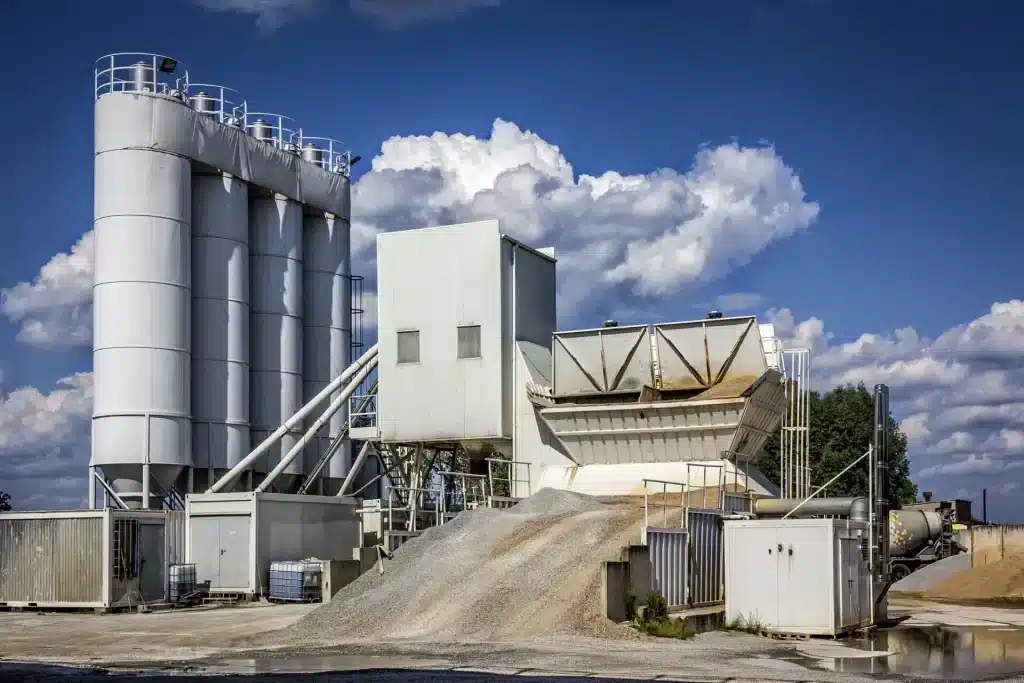

Concrete pumps are not only those large pump trucks on construction sites. In the cement and concrete industry, pumps are used continuously for mixing, cleaning, recycling, and pumping wastewater and slurries. In this article, you will learn where concrete pumps fit into the process, which problems you need to prevent, and which selection criteria help you choose a pump that remains maintainable under harsh conditions.
- In cement and concrete production, you often pump dirty, abrasive media, sometimes with air. That requires robust hydraulics and smart maintenance.
- The biggest failure costs usually come from wear, blockages, incorrect material selection, and hard to access installations.
- Start your selection with the medium (particles, abrasiveness, viscosity), then duty cycle, then the maintenance concept.
- Self-priming pumps installed above ground often make inspection and maintenance easier.
What is a concrete pump in an industrial context?
A concrete pump is a pumping system that moves concrete related media such as cement slurry, process water with solids, flush water, or recycle streams. In industrial applications, it is less about “placing concrete” and more about reliable process flows for mixing, cleaning, transport, and wastewater treatment.
What are concrete pumps used for in the cement and concrete industry?
In production environments, you typically see these tasks:
- Mixing and circulating process media (for example slurry or water streams around mixers).
- Cleaning and flushing installations and pipelines, including water with cement residues and grit.
- Recycling process water and residual streams so water can be returned to the process.
- Pumping wastewater to treatment and back into the process.
Why concrete pumps have it tough in this sector
Pumps in cement and concrete often face harsher conditions than “normal water duty”. Typical stress factors include:
- Abrasive particles and contamination: wear on the impeller, casing, and seals.
- Variable composition: one batch is thin, the next is thicker or contains more solids.
- Air in the line: priming and stable flow become more difficult.
- Downtime is expensive: a pump that is hard to open mainly costs you lost production time.
Which pump types are most common (and when they fit)
1) Self-priming pumps
Useful when you need to handle mixtures or dirty water with air and solids and you want a robust all-round solution. Self-priming helps when the suction line does not always stay filled.
2) Centrifugal pumps (standard)
Strong for continuous flow and often cost efficient for “cleaner” liquids. In cement and concrete processes, this mainly works well if you control abrasiveness and solids, or if you select materials and wear parts accordingly.
Selection criteria: how to prevent rapid wear or blockages
Medium and load profile
- What exactly are you pumping: cement slurry, flush water, recycle water, or a mix?
- How much solid content is in it? And how abrasive are those solids?
- How does viscosity vary over the day?
- Is there air in the medium or in the suction line?
Hydraulic requirements
- Required flow rate (m³/h) and head (m).
- Suction lift and pipe lengths.
- Pulsation: do you need stable flow, or is “rougher” flow acceptable?
Reliability and maintenance
- Can you safely install the pump above ground?
- Can you inspect wear parts quickly?
- How often do you expect wear maintenance and how long can a stop last?
Material selection and wear parts
- Casing and impeller material matched to abrasiveness.
- Sealing concept (mechanical seal, packing, flush options).
- Availability and replaceability of wear parts.
Tip: if in doubt, let maintenance lead. A pump that is theoretically “perfect” but takes half a day to dismantle will lose in practice.
Why “above ground” and quick inspection often win
In the cement and concrete industry, access is everything. Dry self-priming pumps are often installed above ground. That makes inspection, maintenance, and repairs easier.
A practical detail that pays off is front inspection: you can access the internal components without dismantling pipework or disturbing drive alignment. That saves time and reduces the risk of errors during reinstallation.
Common mistakes with concrete pumps in production environments
- Selecting only on flow rate and forgetting abrasiveness and maintenance.
- Underestimating wear and not having procedures and spare parts available.
- “Hiding” the pump in a location with poor access.
- Not defining flushing procedures, which often causes build up and blockages.