High-quality pumps, pump sets and systems.

For us, a pump is more than just a machine

At Gorman-Rupp, pumps are not just machines, they’re what drives us. Since 1933, we’ve been helping customers find the right solution for every application.

Need help selecting or sizing a pump? We’re here. Looking for a full system analysis or co-engineering support? We’ve got you covered. We offer onsite consultancy, commissioning, and startup assistance. And through our Gorman-Rupp Academy, you can boost your pump knowledge with hands-on training and demos.

Don’t settle for just any pump supplier. Work with a partner who’s always there to help, wherever you are. Choose Gorman-Rupp.

We are The Pump People, because you need more than just a pump!

A pump for many applications

Pumps tailored to the needs of diverse industries

No two applications are the same, and neither are their pumping needs. At Gorman-Rupp Europe, we are specialized in providing pumps tailored to the needs of many industries. From construction sites to water management and municipalities , our solutions are designed to handle unique needs of diverse applications with precision and reliability.

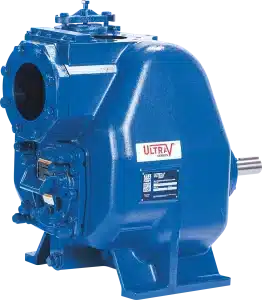
De meest geavanceerde zelfaanzuigende vuilwaterpomp, Ultra V Series van Gorman-Rupp

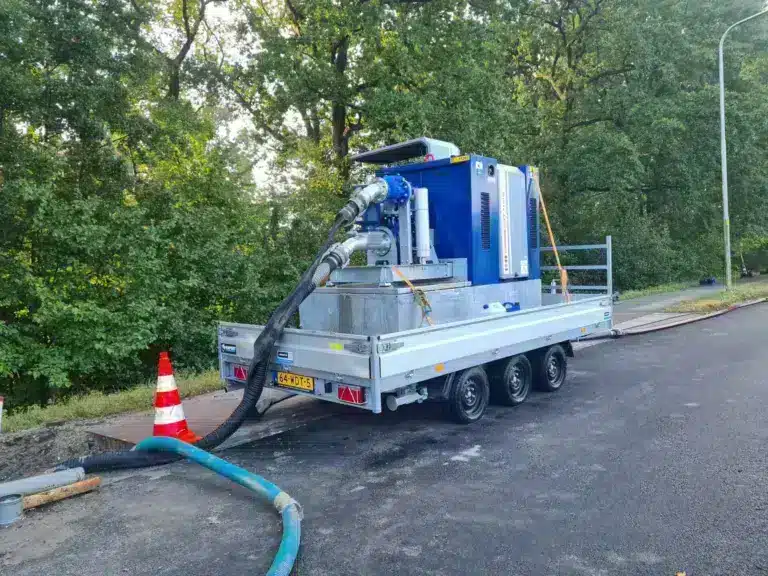
Construction / Mining

Pompen voor de bouw en mijnbouw

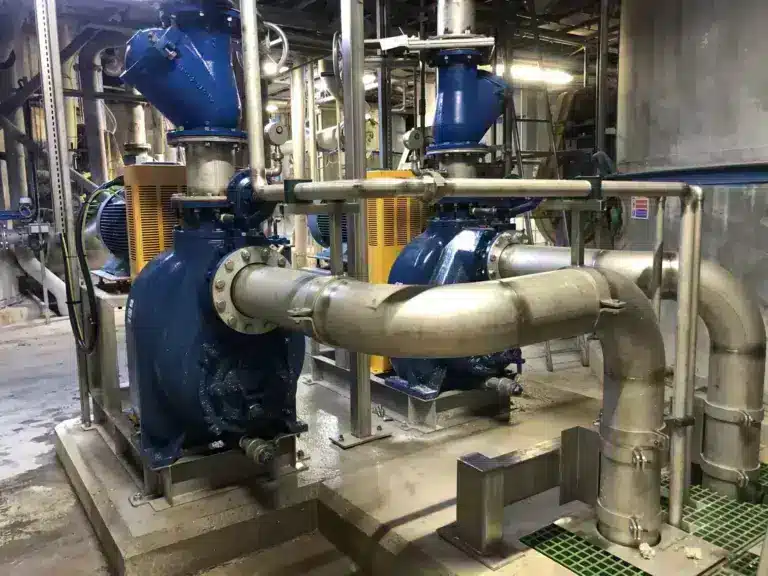
Industry

pompen voor de industrie

Government

Pompen voor de overheid

Power

Flexibility

Reliability

Now in More Models

Gorman-Rupp:
More than just pumps

Gorman-Rupp is not just about pumps, it is about solving challenges, driving technology and innovation, and delivering dependable solutions that stand the test of time. With nearly a century of expertise, Gorman-Rupp bring more than pumps; we bring a promise of quality, advanced technology, and a commitment to work for building a better future.

Quality

At Gorman-Rupp Europe, quality is at the heart of everything we do. Every pump and system is crafted with precision, well tested, and built to perform in even the most demanding environments. From the first blueprint to the final delivery, our focus on quality ensures your operations run smoothly, efficiently, and without compromise. When you choose Gorman-Rupp, you’re choosing peace of mind.

Technology

Innovation drives us forward! At Gorman-Rupp, our pumps are engineered with cutting-edge technology designed to enhance durability, reduce downtime and adapt to evolving industry needs. Gorman-Rupp pumping solutions ensure your operations stay ahead of the curve. For almost 100 years, we have been committed to building technologies that not only solve today’s challenges but also anticipate tomorrow’s just to stand one step ahead all the time.

Sustainability

At Gorman-Rupp, we understand the importance of responsible engineering solutions. That is why we focus on sustainability by creating pumps that are built to last, minimizing waste and reducing the need for frequent replacement. Our durable designs help our customers achieve long-term reliability with fewer resources to minimize environmental impact. Whether it’s reducing energy use, managing water resources more effectively, or building durable products that stand the test of time, we work hard to help industries achieve their sustainability goals. We believe, together, we can make a difference  both for your business and our planet.

Also for rent ArchyRental.com

At Gorman-Rupp Europe, we know every project is different. While some call for a long-term investment, others require a flexible or on-demand solutions. That is where Archy Rental comes in.

Archy Rental offers high-quality pumps for your projects where buying is not the right fit, whether it is for short-term use, seasonal demands, or emergencies, our rental pump fleet are ready to perform when you need them most.

With Archy Rental, you get high-quality equipment, simple rental terms and the trusted service of Gorman-Rupp Europe all the time.

If your project grows or your needs change,  we are here to help you transition seamlessly from rental to ownership, ensuring you always have the right solution.

Logo van Archy Rental, verhuur van pompen en pompsets

Memberships

News

Opstelling van centrifugaalpomp voor betrouwbare vloeistofverplaatsing met een lange levensduur en minimaal onderhoud.

Centrifugal pumps: working principle, types, applications, efficiency, and maintenance

Centrifugal pumps are among the most widely used pumps in the world. They play a vital role in municipal water supply, wastewater treatment, agriculture, firefighting, and industrial processes. Thanks to their robust construction and continuous performance, they are the backbone of countless pumping systems. But what exactly are centrifugal pumps, how do they work, and which types are available?

What are centrifugal pumps?

A centrifugal pump is a mechanical device that moves liquid using the rotational energy of an impeller. As the impeller spins, liquid is drawn into the eye (center) of the impeller and pushed outward by centrifugal force. This action converts mechanical energy into velocity and pressure, resulting in continuous fluid flow.

Centrifugal pumps are valued because they:

  • Provide continuous and smooth flow
  • Handle large volumes of liquid
  • Require relatively low maintenance
  • Can be customized for a wide range of applications

See our range of standard centrifugal pumps.

Centrifugal pump working principle

The working principle is simple but highly effective: rotational energy is converted into hydraulic energy.

Step-by-step process:

  1. Liquid enters the suction side of the pump casing
  2. The impeller rotates, accelerating the liquid outward
  3. The liquid gains velocity, which is converted into pressure in the casing
  4. The liquid is discharged continuously through the outlet

Explore Gorman-Rupp’s centrifugal pump series:

Applications of centrifugal pumps

  • Municipal water systems – reliable supply of drinking water and distribution networks
  • Wastewater treatment plants – moving sewage, sludge, and process water
  • Agriculture – irrigation of fields, transfer of slurry, drainage of land
  • Firefighting – providing instant high-pressure water in critical safety systems
  • Food and beverage industry – hygienic transfer of juices, dairy, and other liquids
  • Chemical and process industries – handling solvents, acids, and light chemicals
  • Cooling systems – circulation of water in industrial and power plant cooling loops

Efficiency and energy use

Pump efficiency is a key consideration in system design.

  • Best Efficiency Point (BEP): each pump has an operating range where efficiency is highest
  • Oversizing or undersizing: running a pump outside its design range increases energy consumption and wear
  • Variable speed drives (VFDs): can optimize energy use by matching pump speed to system demand

Maintenance and service life

Centrifugal pumps are low-maintenance compared to many other pump types, but regular care is essential:

  • Inspect seals and bearings for wear
  • Check shaft alignment with the motor
  • Keep suction lines free of debris
  • Monitor vibration and noise levels
  • Replace worn impellers or casings promptly

Common mistakes to avoid

  • Running dry: operating without liquid damages seals and impellers
  • Ignoring cavitation: bubbles collapse inside the pump, causing pitting and reduced performance
  • Wrong material selection: corrosive or abrasive liquids require special alloys
  • Poor installation: misalignment and inadequate foundations shorten lifespan

FAQs

What is the difference between centrifugal and positive displacement pumps?

Centrifugal pumps move liquid continuously, ideal for high flow rates. Positive displacement pumps deliver fixed volumes per cycle, better for viscous or high-pressure fluids.

Yes, standard models require priming. Self-priming centrifugal pumps from Gorman-Rupp remove this step.

Efficiency varies by size and design, but large industrial pumps often achieve high efficiency when operated near their BEP.

Common materials include cast iron, stainless steel, bronze, and special alloys depending on the liquid.

Conclusion

Centrifugal pumps are reliable, versatile, and essential in countless industries. Understanding their principle, types, applications, and maintenance helps operators choose the right pump for every situation.

Contact Gorman-Rupp to find the right centrifugal pump for your application.

Bentonite Pumps: Reliable Performance for HDD Applications

Horizontal Directional Drilling (HDD) has revolutionised how underground pipelines and cables are installed. By eliminating the need for open trenches, it reduces surface disruption, traffic closures, and restoration costs. At the heart of every efficient HDD setup is one crucial component: a reliable bentonite pump.

Bentonite, a clay-based drilling fluid, lubricates the bore, stabilises the hole, and carries drill cuttings to the surface. Handling this heavy, abrasive fluid requires durable, high-performance pumps that can maintain flow and pressure under harsh conditions. That’s exactly what Gorman-Rupp delivers.

The role of bentonite pumps in HDD

During horizontal directional drilling, bentonite pumps are responsible for:

  • Circulating drilling fluid between the entry pit and recycling unit
  • Managing variable flow rates during pilot boring, reaming, and pullback
  • Handling abrasive slurry without clogging or loss of performance

Simply put, the pump is essential in any drilling operation. It must be reliable, wear-resistant, and ready for continuous operation.

The challenge of pumping bentonite

Bentonite slurry is thick, viscous, and abrasive. It wears down impellers, causes blockages, and can trap air in the suction line. Pumps often need to handle intermittent flow or even prologued dry-running periods, all without losing efficiency or reliability.

A pump failure can halt an entire HDD operation. That’s why Gorman-Rupp’s S-Line and E-Line PAV4 and PAV6 pumps were developed specifically for bentonite and HDD applications. These dry self-priming vortex pumps combine robust construction, intuitive operation, and low maintenance demands.

Built for continuous operation

In HDD environments, pumps often run 24/7 under variable loads. The PAV-series maintains consistent performance even during stop-and-go operation. Large oil baths, efficient cooling, and precision seals prevent overheating and cavitation.

Beyond HDD applications

While developed for HDD, Gorman-Rupp bentonite pumps are equally suited to mining, tunnelling, civil engineering, wastewater bypass, and industrial slurry applications.

Built on experience, engineered for reliability

With nearly a century of pump engineering expertise, Gorman-Rupp continues to set the standard for performance and reliability. From our European headquarters in Waardenburg, the Netherlands, we provide local service, spare parts, and technical support.

Contact Gorman-Rupp Europe today, our experts will help you find the right setup for your project.

Why choose Gorman-Rupp bentonite pumps

  1. Dry self-priming vortex design – The PAV4 and PAV6 pumps use a vortex impeller that allows solids to pass freely. The built-in vacuum or compressor-venturi system enables quick priming even with an empty suction line.
  2. Proven wear resistance – Abrasive materials like sand and gravel are no match for the reinforced impeller and casing.
  3. Built for heavy-duty environments – Fully welded, hot-dip galvanised steel chassis provides maximum strength.
  4. Easy maintenance – Quick service without dismantling pipework.
  5. Unsurpassed priming : Gorman-Rupp’s proprietary TPAWS priming systems enables fast and trouble free priming under all conditions.
  6. Sustainable power options – Stage V diesel or electric drive for low-emission operation.

FAQs

What is a bentonite pump?

A bentonite pump is a heavy-duty pump designed to move the thick, abrasive drilling fluid used in HDD operations.

Bentonite acts as both a lubricant and a support fluid, stabilising the bore and cooling the drill head.

The S-Line PAV4 and PAV6 series are purpose-built for bentonite and HDD applications.

Above-ground, Self-priming pumps allow for easier operation and service. They remove air automatically, saving time and preventing air locks.

Maintenance is simple thanks to Gorman-Rupp’s removable rotating assembly.

PAV4 models deliver up to 220 m³/h, while PAV6 reaches 490 m³/h.

Yes, both Stage V diesel and electric options are available.

Beyond HDD, they are used in mining, tunnelling, and industrial slurry handling.

Understanding Sewer Pumps – What They Are, How They Work & Which One Fits Your Needs

A sewer pump plays a vital role in handling wastewater and sewage in municipal, industrial, and residential settings. When sewer systems face high flows, solids, or grit, choosing the right sewer pump ensures reliable performance, fewer blockages, and long service life. In this blog you’ll learn:

  • What a sewer pump is
  • How it works
  • How to select the right model for your application

We’ll draw on industry best practices, Gorman‑Rupp product types, and real‑world scenarios to help you make well-informed decisions.

What is a sewer pump?

A sewer pump is a pump designed specifically to handle sewage and wastewater that contains wipes, solids, suspended solids, grease, grit, and other contaminants. Its purpose is to move sewage from one location to another—for example from a building to the sewer main, or from a low‑lying area to a treatment facility.

Key characteristics of a sewer pump:

  • Ability to pass solids without clogging
  • Resistance to abrasion and corrosion
  • Reliable operation under variable flow and head conditions
  • Designed for messy, difficult media

How does a sewer pump work?

Sewer pumps can operate in different ways depending on their design. Below are common types and their operation principles:

Standard Centrifugal Pumps

  • These use an impeller spinning at high speed to throw fluid outward, converting mechanical energy into kinetic energy, then into pressure energy.
  • Standard centrifugal pumps are good when solids are small and suspended. They are simple, robust, and relatively easy to maintain.

Self‑Priming Centrifugal Pumps

  • These pumps can evacuate air from the suction line so that the pump can start pumping even when partly filled with air.
  • Useful in applications where the pump is located above the liquid level or when suction lift is required.

Pump Sets & Reliasource Systems

  • For large flows or critical applications, pump sets (multiple pumps working in parallel or series) provide redundancy and capacity.
  • Systems like Reliasource offer enhanced monitoring, serviceability and parts availability.

Which sewer pump is suitable? Key Selection Criteria

Choosing the right sewer pump depends on several important parameters. These include:

Flow rate (capacity):
This defines how much liquid the pump needs to handle per hour or per minute. It’s crucial to determine the maximum expected flow, and you should always add a safety margin—typically 20 to 30 percent above the normal peak flow.

Total head / lifting height:
This is the pressure required to move wastewater vertically and through the piping system. To calculate this, add the vertical lift, the horizontal distance, and any friction losses caused by the type and length of pipework. Also, factor in any valves, bends or other connections that may cause added friction in the pipework.

Solids handling:
Sewage often contains solids, grease, and fibrous materials. If the pump’s solids capacity is too low, clogging and damage will occur. Always check the maximum solids diameter the pump can handle.

Fibrous, stringy material in the fluids
Sewage often contains fibrous, stringy material such as sanitary wipes. In Industrial wastewater, ropes, plastic waste and other contaminants can be found. It is important to select a pump that can handle these difficult contents without failure or frequent clogging. Gorman-Rupp offers Eradicator® or Eradicator+® options on most of the sewage pump to prevent problems in such cases.

Pump type:
Different pump types perform differently depending on the conditions. You’ll need to decide between standard centrifugal or self-priming designs, dry vs wet installations, and ensure the pump can handle the required solids passage size.

Material and durability:
Sewage is corrosive and abrasive. The pump’s casing, impeller, seals, and wear rings must be built to withstand harsh media. Using the right materials reduces maintenance and extends the life of the pump.

Power and efficiency:
Pumps consume energy during operation, so efficiency matters. Choosing a pump with a motor and curve that match your system’s operating point helps reduce lifecycle costs.

Service and maintenance:
Downtime can be costly. The easier a pump is to maintain and clean, the better. Look for pumps with easy access to the impeller, simplified cleaning processes, and good spare parts availability.

Safety and Hygiene
Working on sewage equipment presents challenges when it comes to safety and hygiene. Above ground, self-priming pimps provide the optimized solution when looking at safety risks and hygienic working conditions during maintenance, inspections and repair.

Example applications

Here are typical scenarios and how you’d approach pump selection:

  • Municipal sewer mains: High flow, occasional surges, lots of debris. Likely solution: standard or dry self‑priming centrifugal pump with large solids passage, multiple pumps in parallel.
  • Government/wastewater treatment plants: Regulations, continuous operation, need for reliability. Consider pump sets, redundancy, support by services like Reliasource.
  • Industrial waste water: Typically includes large contents such as ropes, plastic bags, and even tools and other hard particles. Self-Priming centrifugal pumps with a large solids handling capacity, often used in series or parallel to offer redundancy and additional performance, are often used as plug- and play electric powered pump sets.

At Gorman‑Rupp we offer several pump ranges that match different needs related to sewer pumping:

Gorman‑Rupp Pump Types

  • Standard Centrifugal Pumps – ideal for general wastewater and sewage applications. [https://grpumpseurope.eu/pumps/standard-centrifugal/] link internal.
  • Self‑Priming Pumps – when suction lift or priming above liquid level is required. Link: [https://grpumpseurope.eu/pumps/self-priming/].
  • Prime Assisted Pumps – useful where frequent intermittent flows are expected (ideal for temporary or emergency situations). Link: [https://grpumpseurope.eu/pumps/prime-assisted/].
  • Pump Sets – parallel or alternating sets for redundancy and high capacity. Link: [https://grpumpseurope.eu/pumps/pump-sets/].
  • Reliasource SCS – our service, parts and monitoring support to ensure your sewer systems stay operational. Link: [https://grpumpseurope.eu/pumps/pump-sets-systems/reliasource-scs/].

Also, in terms of applications, sewer pumping is critical in construction (temporary bypass) and government/wastewater contexts. You can read more on Gorman‑Rupp’s work in [Construction and mining/ Sewage and wastewater] and [government/ Sewage and wastewater] applications.

Installation, Operation & Maintenance Best Practices

Even the best pump fails early without proper installation and care. Here’s how to ensure long life and reliable performance:

  1. Correct Installation
    • Size piping properly to minimize friction lossesEnsure proper sealing at suction and discharge
    • Provide for adequate ventilation and cooling of motor
  2. Priming & Start‑up
    • For self‑priming or dry priming pumps, follow manufacturer’s priming procedures
    • Avoid prolonged dry running (no fluid in the pump)
  3. Monitoring & Controls
    • Use level sensors to prevent overflow or excessive run‑time
    • Monitor motor current to detect overload or blockages
  4. Regular Maintenance
    • Inspect impeller and wear components periodically
    • Clean screens or strainers of debris
    • Lubricate bearings as recommended
  5. Spare Parts & Support
    • Keep spare impellers, seals, wear rings in stock
    • Use the manufacturer’s authorized service providers to ensure parts compatibility

Common Mistakes & How to Avoid Them

  • Undersizing flow/capacity → results in overload and short life
  • Not allowing for solids → frequent clogging
  • Flush installation without consideration of hose/piping losses → pump working further off its best efficiency point
  • Skipping maintenance → reduces reliability

Conclusion

A sewer pump is more than just a motor and impeller: it must be matched to your flow, solids load, head requirements, and operating environment. At Gorman‑Rupp we combine a full product range—including standard and self‑priming pumps, dry self‑primers, pump sets, and complete packages like Reliasource—to help you get the right pump, installed and maintained properly.

If you’re evaluating a sewer pump for your project, our experts are here to help: whether you need to size a pump, assess materials, or plan for long‑term maintenance, we partner with you to ensure dependable performance.

Meer weten?

Laat uw naam en e-mailadres achter en u ontvangt de brochure direct in uw inbox.

Want to know more?

Leave your name and email address below and receive the brochure directly in your inbox.