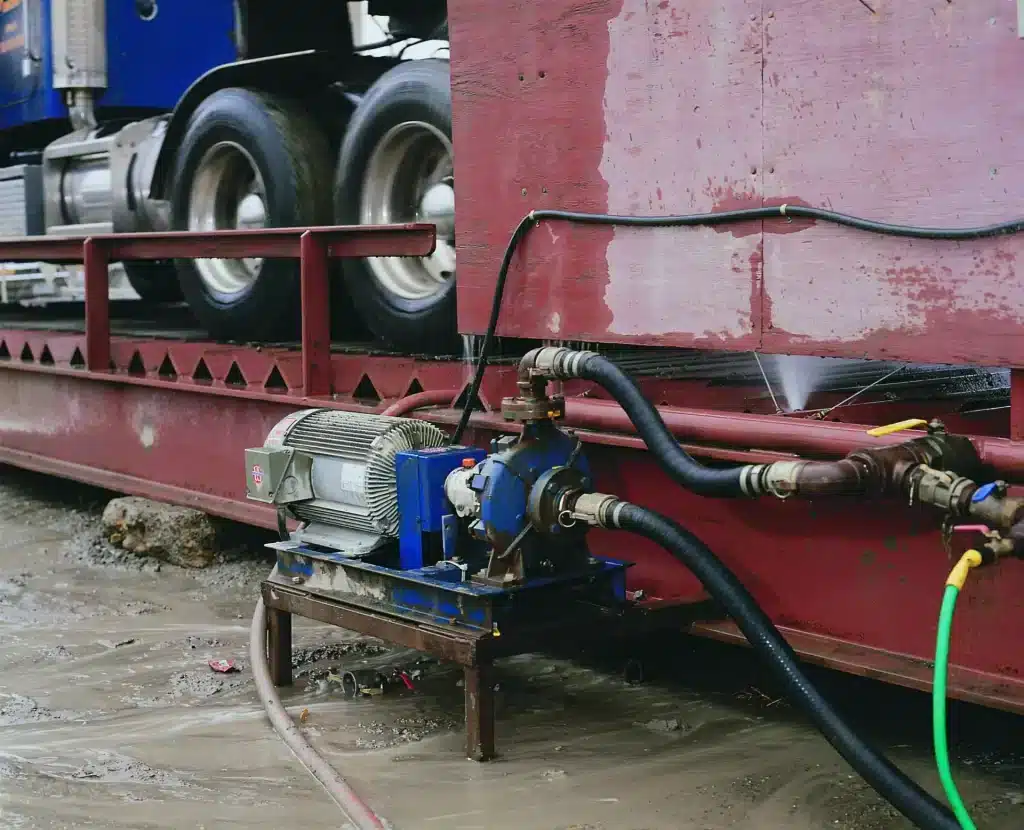



A well-maintained centrifugal pump delivers stable performance for years with low operating costs. Neglect leads to premature wear, unexpected downtime and higher energy costs. In this article, we describe six practical steps for effective centrifugal pump maintenance.
Step 1: Check the shaft seal regularly
The mechanical shaft seal is one of the most vulnerable components. A leaking seal causes fluid loss, contamination and eventually damage to bearings and shaft. What to check: checking the level and condition of the oil, unusual sounds and vibrations, temperature of the seal area. For abrasive fluids, a cartridge seal is preferred. The 6400 Series comes standard with an oil-lubricated, double-floating mechanical seal designed for contaminated media.
Step 2: Monitor the bearings
Bearings carry the rotating forces. Bearing wear manifests as increasing vibrations, temperature rise and audible noise. What to check: bearing housing temperature, vibration level, oil level and quality. Pumps with oversized bearings, such as the 6500 Series, have longer bearing life and require less frequent intervention.
Step 3: Inspect the impeller and wear rings
Wear on the impeller or wear rings increases internal clearance, reducing efficiency and increasing energy consumption. With pumps featuring replaceable wear rings (such as the VGH Series), efficiency can be restored by replacing only the wear rings, without replacing the complete impeller.
Step 4: Check the pump casing
In wastewater applications, fibres, wipes and other materials can accumulate and impede flow. Pumps with an inspection port (such as the 6500 Series) allow checking without full disassembly. Pumps with Eradicator technology (6400 Series) automatically shred wipes and fibres, preventing blockages.
Step 5: Monitor the duty point
A centrifugal pump running consistently outside its optimal operating range wears faster. Too far left on the pump curve causes recirculation and overheating. Too far right causes cavitation and overloading. Variable frequency drives (VFDs) can help maintain the pump within the optimal range.
Step 6: Plan preventive maintenance
Reactive maintenance is always more expensive than preventive maintenance. Recommended schedule: daily/weekly visual checks, monthly bearing temperature and oil level checks, semi-annual seal inspection and wear ring measurement, annual impeller and casing inspection with alignment check.
The interchangeable rotating assembly of the 6400 Series enables replacement on site without dismantling the casing or piping, significantly reducing maintenance time. Gorman-Rupp offers fast delivery of original parts, often within 24 hours.
Frequently asked questions
It depends on the application, medium and operating hours. For continuous duty in wastewater applications, monthly checks and semi-annual wear part inspection is a good guideline.
Seal wear (leakage), bearing wear (vibrations), blockages from solids and cavitation damage. Most are preventable with regular inspection and timely replacement of wear parts.
Want to know which centrifugal pump best fits your application? Share your application data (flow, head, medium, solids, installation type) and we will advise the right configuration. Contact Gorman-Rupp Europe.